
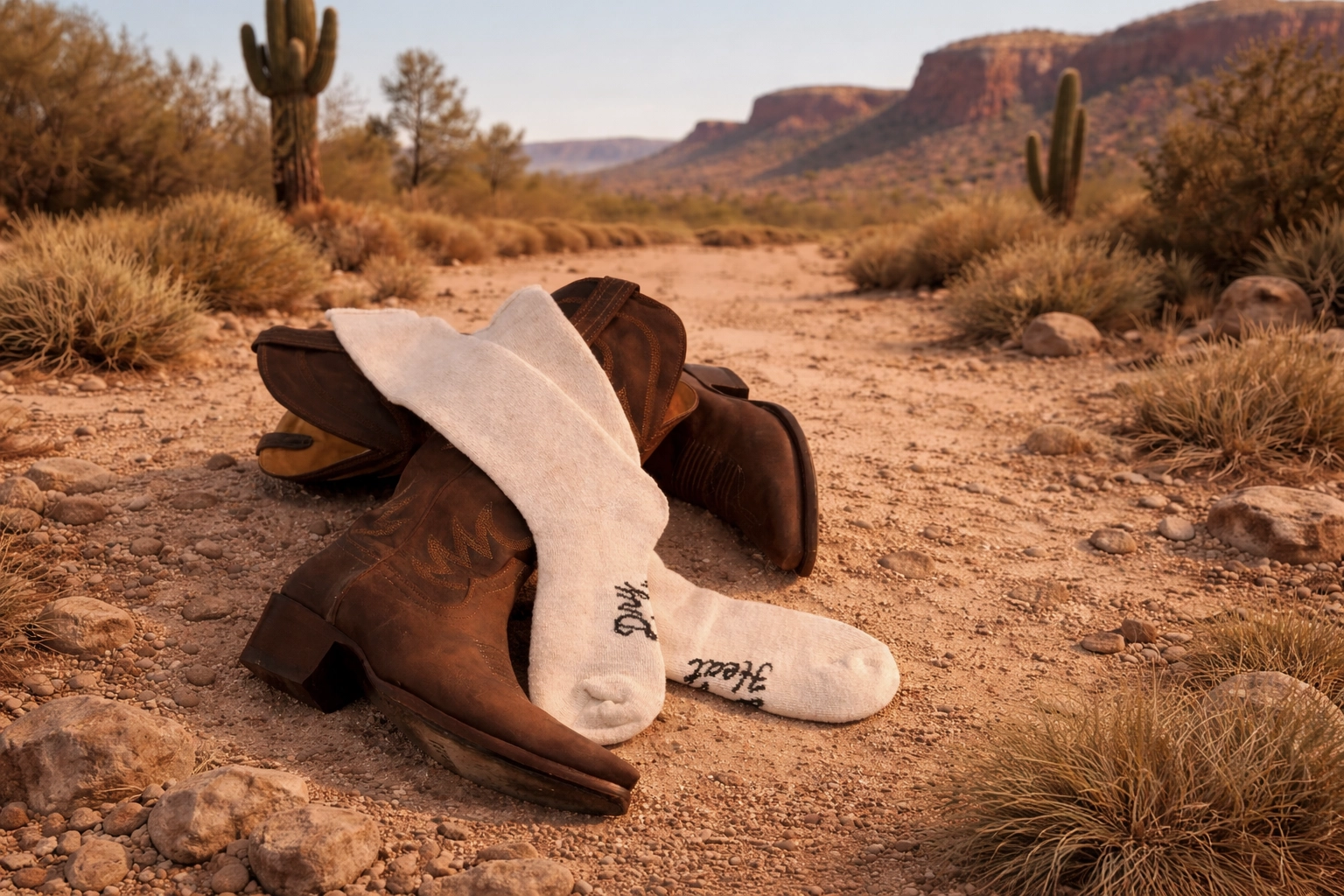
A land without borders.
A people without apology.
A manifesto, a prayer, a love letter. Read slow — the desert rewards patience.
There is a stretch of land that begins somewhere past El Paso and doesn’t end until it reaches the sea. A corridor where the wind speaks Spanish and English in the same breath, where borders are lines on paper but the earth knows no such thing. It is a country of its own — wide, sun-cracked, ancient, and alive with the echoes of everyone who has ever crossed it.
Here, the sun does not rise. It ignites. It rolls over mesas and buttes and arroyos like a slow flame moving across a drum skin. The dry heat wakes slowly — first a glow, then a shimmer, then a pulse in the air that turns every stone, every cholla, every weathered fencepost into an echo of the history beneath it.
This is the wide West. And it stretches farther than any map has ever been honest about.
The border that separates Mexico from the American Southwest is less a line than a seam — something sewn hastily across a landscape that had already been stitched together for thousands of years by Indigenous nations, Spanish missions, mestizo ranchers, curanderos, smugglers, monks, outlaws, traders, and the countless unnamed feet who carved the paths that still wind through the desert like veins of memory.
Before there were states, before there were nations, before America or Mexico existed as political ideas, this was a single country — a continent of dust and grit and ritual, where the Apaches traded with the Yaqui, where the Pueblos lit fires that could be seen from a hundred miles away, where Spanish friars followed Indigenous guides into places they would never understand, where Mexican vaqueros worked cattle across a frontier that would later be arbitrarily redrawn. The desert does not recognize these later inventions. It never has.
It remembers the conquistadors who stumbled across it searching for cities made of gold. It remembers the Jesuit priests who built missions out of adobe and dreams. It remembers the Pueblo Revolt, the Mexican-American War, the long migration routes of the Tarahumara, the silver caravans of the Camino Real, the vaqueros who taught the Anglo cowboy everything he now pretends to have invented himself.
This is the story most American Western mythology leaves out. The version you find in old John Wayne films and Ralph Lauren catalogs. The version that begins with Manifest Destiny and ends with Marlboro men squinting into imaginary horizons. The version scrubbed of its Mexican fathers, its Indigenous roots, its mestizo lineage, its blood and memory and dirt. But the West was never a Hollywood backdrop. It was — and is — a brown land. A mestizo land. A land of maíz, mezcal, chile, tequila, mezquite, mesquite, paloma, palomino. A land where the best cowboy in the world has always been a vaquero. Where the sharpest boots have always come from León, Guanajuato. Where the most beautiful textiles in the Americas come from Oaxaca, Chiapas, Guerrero, and Jalisco. Where the hat every cowboy claims as his own came from the charros of central Mexico before the idea of Texas was even stitched into a flag.
This is our West.
And at Dry Heat, we make clothing for people who feel it — for wanderers who understand that the Southwest is not a costume; it is a culture. It is a temperament. It is a quiet courage passed down from generation to generation, from Sonora to Santa Fe, from Chihuahua to Monument Valley. It is the dust on an old pickup truck, the shadow of a buzzard circling above an endless carretera, the scent of piñón smoke from a tarpaper roof, the taste of orange peel dipped in chile salt on a porch at 105 degrees. It is the long pull of a Steinbeck paragraph meeting the slow rise of a Juan Rulfo sentence. It is Mary Oliver’s attention combined with Octavio Paz’s gravity. It is Cormac McCarthy sipping from a tin cup at the edge of the world.
The wide West is the land of wanderers — people who move not because they are lost, but because they are listening. People who understand that the desert is a teacher, and that its lessons arrive slowly, in silences. People who feel just as at home in a Marfa dust storm as they do in a Sonoran panadería at dawn. People for whom a day driving across New Mexico, with the windows down and the radio soft, is a form of prayer.
This is a land of contrasts, and the wanderers of this land carry those contrasts in their bones. The wind here is hot during the day and cold at night. The mornings are silver and the evenings are gold. The earth is cracked open by drought, but the wildflowers still bloom after the first monsoon. Here, the old cathedrals and the old kiva ruins hold the same kind of stillness — a silence heavy with ancestors and rain. The cowboy here speaks Spanish. The abuela here tells stories older than Texas. The vaquero here taps his boot to a norteño beat as the sun sets over a borderland that refuses to forget itself.
At Dry Heat, we believe clothing should carry that memory. That it should feel like it could have come from a traveler’s bag as easily as from a saddlebag. That it should move with the wearer — light enough for a noon walk across a creosote flat, structured enough for a cold canyon night, soft enough to fall asleep in on the drive back home. We design for people who love the smell of rain on sagebrush, who understand the poetry of a long silence, who have a favorite gas station in some nowhere town halfway between here and there, who keep a piece of turquoise in their pocket just in case, who know the precise shade of blue the Chihuahuan Desert turns at dusk, who have taken shelter beneath the shade of a mesquite as afternoon lightning danced across a red sky.
Our clothing is a love letter to these travelers. These migrants. These dreamers. These dust-kicked poets and cattle-moving farmhands and second-generation mariachis and brown-eyed border artists and worn-booted road photographers and cotton-clad ranch hands and all the quiet wanderers who belong to the wide West without claiming it as costume.
We build for the people who understand the West the way it really is: a place of memory, a place of struggle, a place of beauty, a place shaped by indigenous hands, Spanish tongues, mestizo bloodlines, and — yes — by every soul who ever stood in front of a prickly pear and listened for the rain.
We build clothing for the dust, for the highway, for the ranch, for the fiesta, for the dawn, for the dusk, for the long echo of the pueblo bells, for the campfire at the foot of a saguaro, for the warm sopa on a winter night in Hidalgo County, for the mezcal shared under a cottonwood, for the prayers whispered in an old adobe church.
Most of all, we build for the wanderers. For the ones who still believe in slow miles and wide sky. Who still understand that the world is not a destination, but a path — dry, hot, golden, and ancient.
The West lives on in every one of these travelers.
And Dry Heat lives for them.